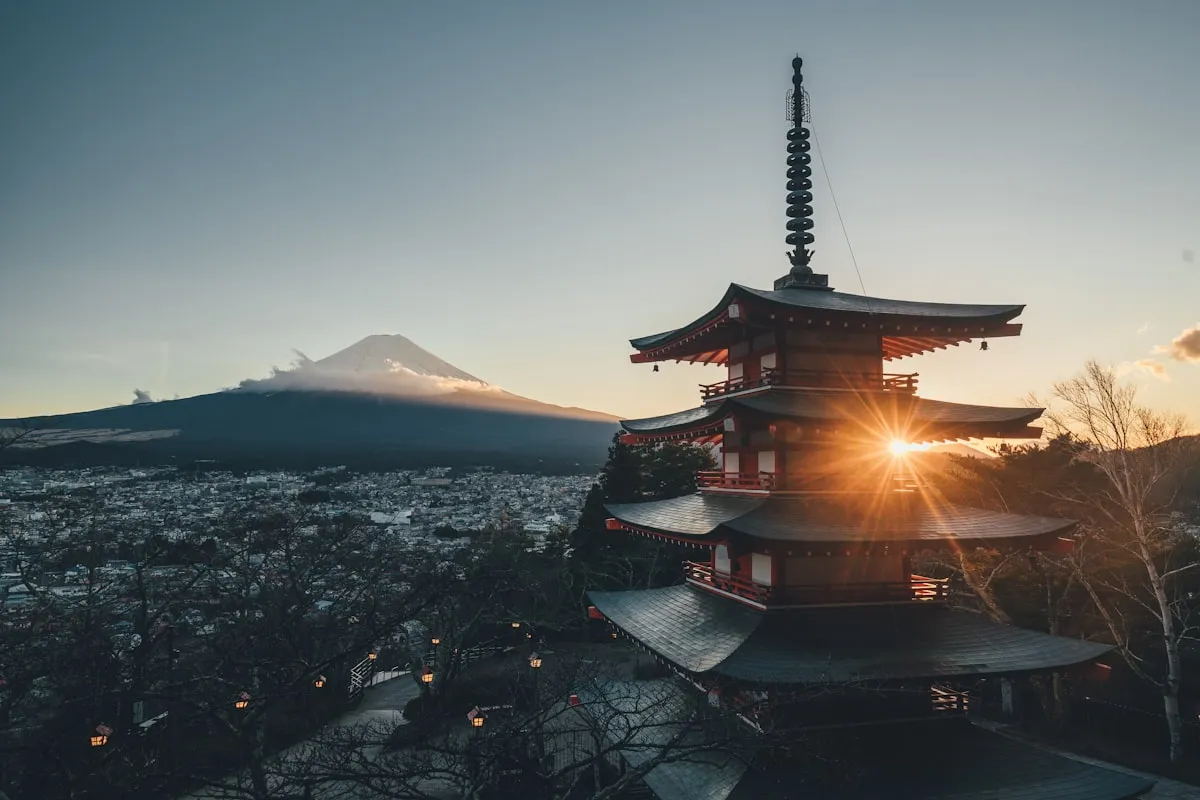
Foguangsi · Shanxi Province · 857 CE (East Hall)
Foguang Temple houses the second-oldest surviving timber-frame building in China — the East Hall, dated to 857 CE during the Tang dynasty. Discovered by the architectural historian Liang Sicheng in 1937, this remote mountain temple preserves the bold, powerful proportions that define Tang architecture. Its survival through 1,100 years of earthquakes and wars testifies to the extraordinary durability of Chinese timber construction.
The main hall is seven bays wide and four bays deep, covered by a single-eave hip roof — the most prestigious form in the Chinese building hierarchy. Its dougong brackets are among the largest ever recorded in Chinese timber architecture: roughly 2.5 meters tall, they stand about half the height of the columns themselves, projecting the deep eaves nearly 4 meters beyond the wall plane. This massive scale is the signature of Tang construction, when brackets carried the full weight of the roof rather than decorating it.
The hall follows Tang canons that later builders abandoned: the roof slope is gentle (about 1 in 3), the columns taper slightly toward the top, and the eaves sweep upward at the corners in a long, unhurried arc. When Liang Sicheng measured the building in 1937, he found its structural logic matched the principles codified in the Song dynasty manual Yingzao Fashi (1103) — proof that Tang standards lived on in later building codes even as later halls shrank the brackets into ornament.
In the 1930s the prevailing scholarly view held that no Tang dynasty timber building survived on Chinese soil. Liang Sicheng, founder of modern Chinese architectural history, had noticed a hall labeled 'Da Foguang Si' (Great Foguang Temple) in a 10th-century mural of Mount Wutai in Cave 61 at Dunhuang — and decided the remote valley was worth the search.
On June 26, 1937, Liang, his wife Lin Huiyin, and two assistants reached the temple and found a timber hall whose bold dougong matched Tang descriptions exactly. The clincher was a faint ink inscription on a beam: 'Disciple of Buddha, female devotee of the capital, Ning Gongyu', together with the date — the 11th year of Dazhong (857 CE). The announcement, made days before the outbreak of the war with Japan, rewrote the history of Chinese architecture overnight.
The East Hall preserves more than its frame: the original Tang clay sculptures still stand on the main altar — Sakyamuni flanked by bodhisattvas, disciples, and guardian kings — along with painted murals on the upper walls and the small portrait of the donor Ning Gongyu, whose patronage is recorded in the beam inscription. Very few Tang halls survive at all; fewer still keep their original furnishings.
The hall's endurance is itself a structural lesson. In 2017 the temple joined the UNESCO World Heritage Tentative List, and recent engineering studies attribute its 1,100-year survival to the very features later builders dropped: deep eaves that shield the timber core from rain, massive brackets that flex under seismic load, and a stone platform that keeps moisture away from the wooden columns.
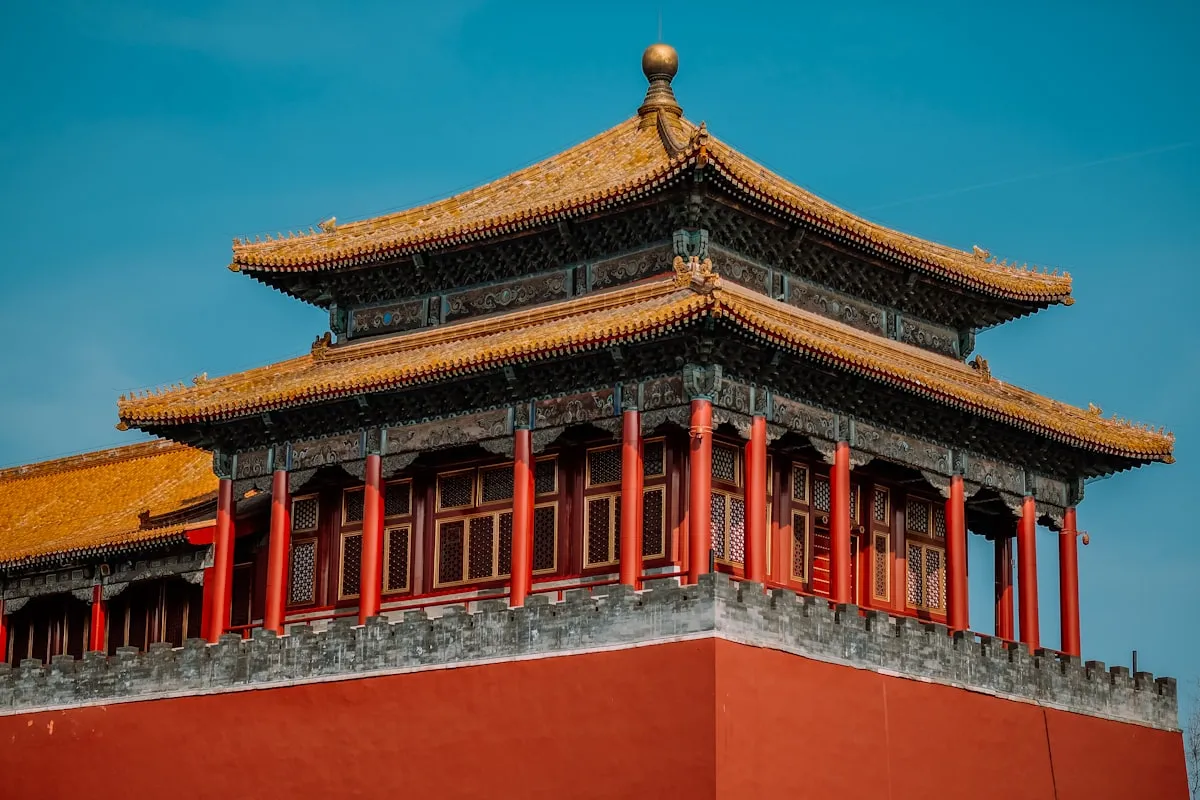
Best Time to Visit
May-June or September for comfortable mountain temperatures
Photography Tips
East Hall's dougong best captured from low angle; morning light on front facade
How to Get There
2.5hr drive from Taiyuan; combine with Nanchan Temple; limited public transport
For decades scholars believed no Tang dynasty timber building survived. The 857 CE East Hall — identified by Liang Sicheng from a faint beam inscription — proved otherwise and rewrote the history of Chinese architecture, preserving the bold structural dougong that Tang builders used.
The temple sits in a remote valley near Wutai Mountain, about 2.5-3 hours by car from Taiyuan. Public transport is limited — most visitors hire a car or driver, ideally combining it with the nearby Nanchan Temple.
Original Tang sculptures of the Buddha and bodhisattvas, surviving Tang murals, the donor portrait of Ning Gongyu, and the hall's massive dougong brackets — a rare complete survival of Tang interior design.